Showing posts with label Germany. Show all posts

Friday, July 1, 2011

Safety approval for new Eurostars


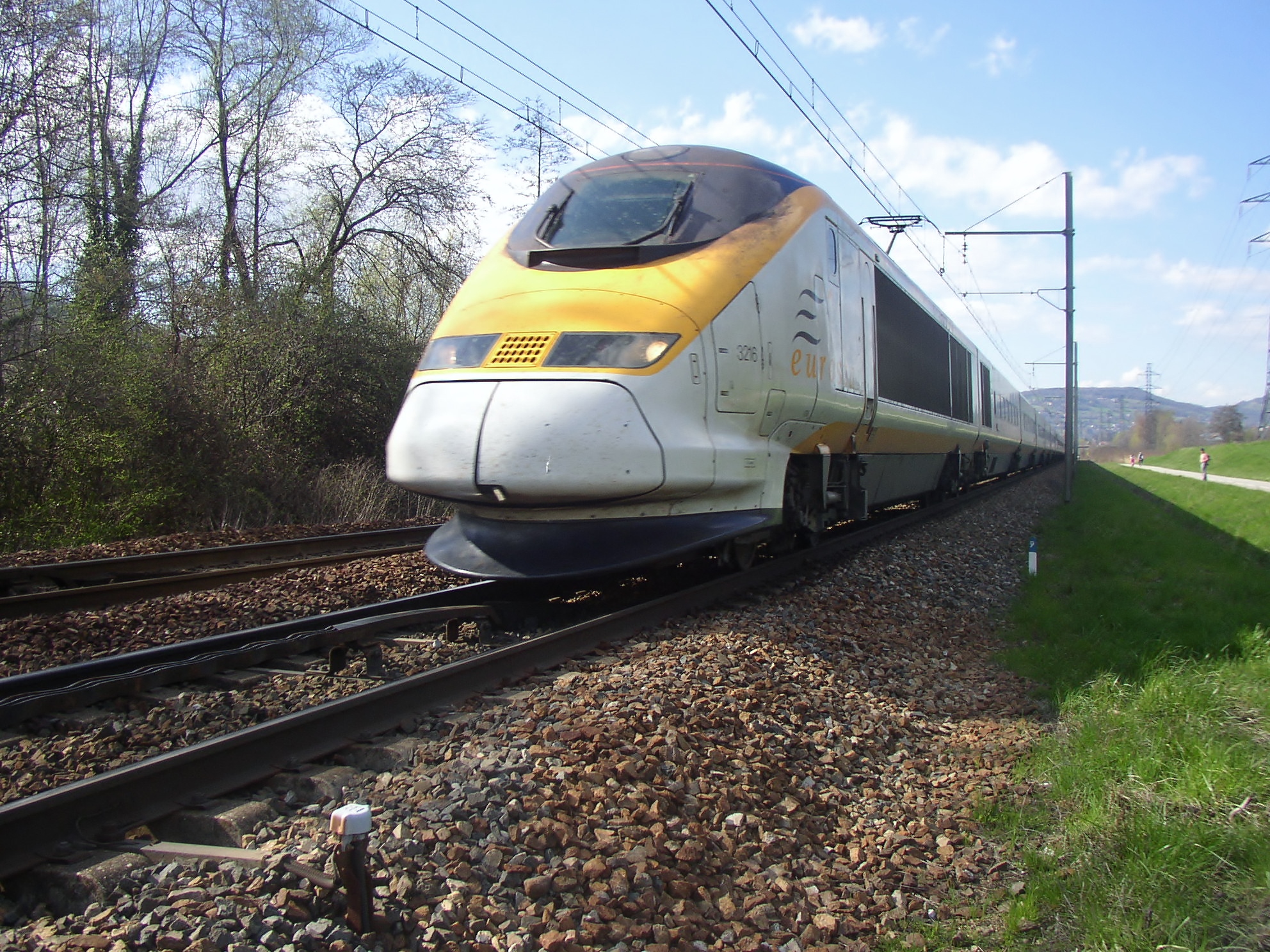
EUROSTAR'S plans to start running new state-of-the-art trains through the Channel Tunnel from 2014 have been approved by tunnel safety authorities.

The train operator announced last year that it was planning to buy 10 new trains from German manufacturer Siemens, but rival French firm Alstom, which makes the current Eurostar stock, claimed they were unsafe.

The new trains use a system called "distributive traction", where the engines are placed under the floors throughout the length of the train. The current Eurostar fleet has separate motor carriages at the front and back.

The committee responsible for Channel Tunnel safety has now confirmed to Eurostar that the new model will be allowed in the tunnel.

Alstom has one last chance to block the deal going through. It is awaiting a ruling from the high court in London next year on whether the decision to award the tender to German manufacturer Siemens breached contract law.

The 10 new Siemens Velaro trains, which are capable of reaching speeds of up to 320kph, will cut the journey time from Paris to London from to two hours.

The new trains will carry 900 passengers, a 20 per cent capacity increase on the current stock, and will include wi-fi and on-demand video and music.

Siemens carried out a test journey last year to prove the trains were safe and that the train can be efficiently evacuated in an emergency.

Tuesday, November 23, 2010

Earlier London-Cologne rail link


Passengers taking the early train to Cologne via Brussels will soon be able to reach the Rhineland city an hour earlier.
London agent European Rail told Business Traveller that a passenger taking Eurostar’s 0619 departure from St Pancras will, from the start of the winter schedules on December 13, be able to reach Cologne at the earlier time of 1215. 
Passengers change at Brussels Midi between Eurostar and a new and earlier ICE (see note 1 below) train service. Overall journey time (including the connection) is 4 hrs and 56 mins.
If not stopping in Cologne, European Rail can provide onward tickets on to various cities including Frankfurt, Hanover, Munich and Berlin.
At present the first rail link of the day between London and Cologne  involves taking the 0730 Eurostar from St Pancras and changing to Thalys (see note 2 below) which provides an arrival into Cologne at 1315.
Another new ICE service provides a 1545 departure from Cologne which, following a change to Eurostar in Brussels, gets you back to London at 2003. Overall journey time (including the connection) is 5 hrs 18 mins.
One-way fares lead-in at €99 for first and €49 for standard class tickets according to demand. Return fares are double. Passengers can mix and match tickets.
It must be noted that tickets for the above-mentioned Eurostar/ICE London-Cologne train connection cannot at present be booked through eurostar.com. But the special fares are offered by train agents such as European Rail or from German Rail’s UK office or website.
Train timings cannot compete with air if you require a day trip. But they are feasible for anyone stopping over and who requires more reliable travel arrangements during the winter.
German Rail hopes to receive permission to operate its ICE into London from the end of 2013 (see online news October 19) which would considerably speed up journey times in the future.
The rail operator’s UK marketing executive Stefan Heulle told Business Traveller that the plan is to operate three trains a day from St Pancras from December 2013. “Two ICE trains, each of eight coaches, would run together as far as Brussels Midi. There the 16-coach train would be split with one section heading to Amsterdam via Rotterdam and the other bound for Frankfurt via Cologne.”

For more information visit europeanrail.com, bahn.co.uk.
Notes:
  1. ICE is German Rail’s high-speed train
  2. Thalys is based around the design of France’s high-speed TGV train.  Thalys is jointly owned by the national railways of France, Holland, Belgium and Germany.

Thursday, October 21, 2010

Deutsche Bahn successfully tests ICE 3 in Eurotunnel


Safety tests for the ICE 3 trains went well this past weekend indicating the train can be evacuated in under 20 minutes, said Eurotunnel on Tuesday.
Deutsche Bahn, which is hoping to launch the high-speed train in the tunnel, will mostly likely begin in 2012 or 2013 if further tests are successful. Currently, Ice 3 trains do not adhere to all the safety requirements needed to serve passengers in the Channel Tunnel.
Two pilot runs were taken this weekend, and Eurotunnel spokesman, John Keefe stated that both ‘went well’. According to Keefe, both tests showed that the train can be evacuated in less than the 20 minute time-frame required by safety regulations.
The Channel Tunnel Safety Authority, a joint team of English and French authorities, has been reviewing current safety policy. Eurostar, which currently offers high-speed services in the tunnel, is already awaiting for policy changes that would allow the use of ICE 3 trains.
In December, when five Eurostar trains shut down, Eurotunnel’s evacuation process underwent
sharp tests. Passengers, however, had to wait as long as 16 hours to reach their final destination.

Tuesday, October 19, 2010

German rail giant sends 200mph train into London on 'trial run' in bid to slash journey times to Europe


A 200-mph German bullet train has crossed the Channel and rolled into Britain today from the nation most renowned for making its railways run on time.
The high-speed train from Deutsche Bahn was carrying out a slow-speed  'dry run' trial for a new direct cross-channel link between London's St Pancras station and Frankfurt in Germany, as well as Amsterdam in Holland, within three years.
Experts say the competition could also mean lower fares with a one way trip to Germany costing as little as £39 to £49.

The German 'Inter City Express' train bearing the initial  letters 'ICE' adorned as a red, white and blue Union Flag, aims to replace passenger jets as the main transport to Germany's financial capital and the Rhineland from 2013.
Three services will run daily, and will also serve Brussels, Cologne and Rotterdam. The German company wants to run services direct between London and the continent three times a day.
Trains would leave London, travel to Brussels and then split.  One half of the train would go on to Amsterdam via Rotterdam, with the other half travelling to Frankfurt via Cologne. The trains would be capable of travelling at 200mph.
It is the latest step in the plan to create high speed rail links across Britain and Europe - from Edinburgh to Madrid and Manchester to Marseilles.But while trains will hit 200mph on the Continent, tunnels on the UK side of the Channel mean high speed trains are restricted in many places to 140mph.


Launching the plan at St Pancras, Deutsche Bahn boss Dr Ruediger Grube who travelled with the train through the Channel Tunnel  said it marked ' a new era' of train travel adding:'Europe is becoming a small place.
'Every day there are around 50 flights  between the Greater London area and the region of Frankfurt and the Rhineland.'
Until now that was out of reach of the railways, he said:'But times change. Thanks to new railway lines, new high speed trains, and new transport policies, we will be able to share in that market.'
The plan is for three trains a day to Leave St Pancras  carrying 888 passengers in 16 coaches formed of two coupled trains  heading across the Channel. In Brussels, the trains will split, with eight carriages carrying 444 passengers heading to Rotterdam and then Amsterdam.
The other eight carriages will head  to Cologne and then Frankfurt. Deutsche Bahn officials said the journey time from Cologne to London would be under four hours - less than the time it takes to get to Berlin, around four and a half hours: 'Passenger can choose which capital they prefer - yours or ours,' said one DB official.

The German challenger arrived less than three weeks after Eurostar unveiled plans for its own 200mph bullet trains to whisk passengers from London to Paris in under two hours - as well as starting its own direct links to Amsterdam.
German railway giant Deutsche Bahn has been busy buying up a number of UK train operators and has now set its sight on taking on the airlines and arch rival Eurostar to win passenger services  between the UK and the Continent.
It aims to slash the train travelling time from Central London to Frankfurt, nicknamed 'Bankfurt' in Germany, because it is the nation's major financial centre, from around six hours to five.

It also mean business travellers and tourists can relax for longer in their seats or work via wi-fi rather than enduring the hassle of airline check-in, security and trips to and from the airport.
Mr Grube said:'Three pairs of trains will connect Frankfurt and London via Cologne, Brussels, and Lille, with one train running in each direction in the morning, at lunchtime, and in the evening.
'This will also be the first time that Amsterdam and Rotterdam have a direct connection with London.'
Rail Minister Theresa Villiers said it was 'great news' adding:'For many people high speed rail is a more convenient alternative to air or road - allowing them to hop on board in the city centre and catch up on some work along the way.'
However the high speed German-built Inter City Express (ICE) trains have first to pass stringent safety tests to pass through the Channel Tunnel - including evacuations.
Their arrival nevertheless highlights how far international relations have moved. Seventy years ago, at the height of the Battle of Britain,  the narrow strip of water was all that separated Britain from German invasion. Today the nation which was defeated is now running much of Britain's railways.
The new train is being built by Siemens, the German firm which is also, controversially, building the new second-generation 200-mph Eurostar train - despite massive French anger and threatened legal challenges.
Eurostar launched in 1994 and now carries 9 million passengers a year between London, Paris and Brussels.
Earlier this month Transport Secretary Philip Hammond  announced details of the UK's own new bullet trains, with work on the £33billion high-speed project known as High Speed 2 (HS2) set to start in 2015.
It plans to link to the existing London to Folkestone Channel Tunnel link, now known as High Speed 1 (HS1).
The new British bullet trains will run initially to Birmingham before forking off into a 'Y-shaped' route north of Birmingham, with separate legs from the West Midlands to Manchester and the North West  and to Leeds and the North East.
Mr Hammond says the proposed new 250mph high speed train service will slash journey times from London to the North by up to an hour.  But the London to Birmingham stretch will not be complete until 2026, with lines to the North completed around 2033.
In April Deutsche Bahn - which now employs 27,800 people in the UK - agreed a £1.59billion take-over of UK bus and rail firm Arriva, which includes CrossCountry and Welsh rail services.
It has a 20 per cent strake in London buses, runs the Chiltern Railways route between London and Birmingham Snow Hill, owns the company which runs the Royal Train and recently won the contract to operate the Tyneside Metro in Newcastle and Gateshead. It also has a 50 per cent share in the London Overground.

source: Daily Mail

Monday, October 18, 2010

Eurostar trains row may move to EU Commission


THE growing French antagonism to the prospect of Eurostar buying German-built trains may soon involve the European Commission, it is reported. The government in Paris and French train builder Alstom are fighting Eurostar's proposal to buy Siemens trains, arguing that they would not be safe.
Meanwhile, Deutsche Bahn is claiming that a test run of an ICE through the Tunnel and a trial evacuation was successful.
The weekend journey under the English Channel included a safety exercise in which 300 people were evacuated. A DB spokesman said the test had been one of a number which will be needed if public services between London and Germany are to begin in late 2013.
An ICE set is due to arrive at St Pancras International tomorrow, where it will be greeted by transport minister Philip Hammond.
The French government is unhappy about the prospect of DB services through the Tunnel, but is reserving most of its ammunition for Eurostar's plan to buy ten Siemens Velaro-D sets for a reported 525 million Euros. A mockup of one of the trains went on display in London earlier this month, and Eurostar is hoping to introduce them on new routes to destinations such as Amsterdam, Geneva and Lyon from 2014.
The present Eurostar fleet is not suitable, on technical grounds, for service in continental countries other than France and Belgium.
The French state operator SNCF owns 55 per cent of Eurostar International, but the Board nonetheless voted to proceed with the Siemens deal.
This decision may now be examined by the European Commission, who are set to hear French arguments that Siemens trains would be unsafe for service through the Tunnel, a claim vigorously opposed by Deutsche Bahn and now, it seems, Eurostar as well.
Competition on the High Speed route to London has been possible since the start of this year, when new rules allowing international open access came into force, ending the monopoly which Eurostar had enjoyed since 1994.

source: Rail News

Wednesday, October 13, 2010


On Wednesday, a German high-speed train launched a test run on the Channel Tunnel route. If the trials are successful, the Eurostar monoply on the route could become a thing of the past. 

A train belonging to German rail operator Deutsche Bahn entered the Channel Tunnel that connects England with mainland Europe for the first time on Wednesday. The ICE3 train, built by the German company Siemens, threatens to rival the monopoly held by the French-built Eurostar train.
Since the trains still lack approval for the route between France and Britain, they were pulled by a locomotive. On board were staff from Deutsche Bahn and tunnel operator Eurotunnel plus a technical team, but no passengers.
End of an era?
The ICE train was the first passenger train not operated by Eurostar to use the tunnel, after EU rules required the tunnel be opened to competition.
France, which owns 55 percent of the cross-channel Eurostar service, has reacted angrily to the company decision last week to buy trains worth about 600 million euros ($836 million) from Siemens, rather than the French company Alstom.
Testing continues
The train went only part of the way through the tunnel before returning to France. A full trip to London is scheduled for next week.
Deutsche Bahn plans to offer passengers a high-speed connection with ICE trains through the tunnel under the English Channel by the end of 2013. About nine million passengers travel each year on the Eurotstar train routes that connect Brussels, London and Paris.

Saturday, October 9, 2010

Germany - Government denies halt in contentious German rail project (1st Lead)


Stuttgart - A state government in Germany denied a claim Thursday that it had agreed to a temporary halt in controversial work to replace the city of Stuttgart railway station and rail lines.
Stefan Mappus, premier of Baden-Wuerttemberg state, told the German Press Agency dpa, 'There isn't any halt to construction.'
For months, a mainly middle-class protest movement has tried to block the work, citing its multi-billion-euro cost and disruption. When hundreds of people were injured last week in clashes with riot police, it became a national political issue.
Just before Mappus spoke, Heiner Geissler, a former general secretary of Chancellor Angela Merkel's Christian Democratic Union, said he has secured a promise from the Deutsche Bahn rail company and Mappus to halt construction while peace talks proceed.
He spoke inside the 1928 station building that is at the centre of the tussle. Protesters are angry that one of its wings has already been demolished and trees nearby have been felled.
The chief bone of contention is the cost, which is mainly for cutting 23 kilometres of tunnels under the city to the station.
Geissler, who had reportedly been invited by Mappus to help settle the issue, said work had to stop so that the state of play does not change during the talks, which would begin next week.
'This mediation will at least help to weigh up and compare the facts and the arguments,' he said.
Deutsche Bahn also denied to a city newspaper that there was any moratorium on building.
The protests are led by a Stuttgart civic group and backed by the Green Party.
Tunnel supporters have urged Mappus to be resolute and squash troublemakers.
In a separate development, Germany's federal railways inspectorate ordered the rail company to stop felling trees in a park next to the station. It said nature-conservation rules on saving rare beetles in the trees had not been observed.